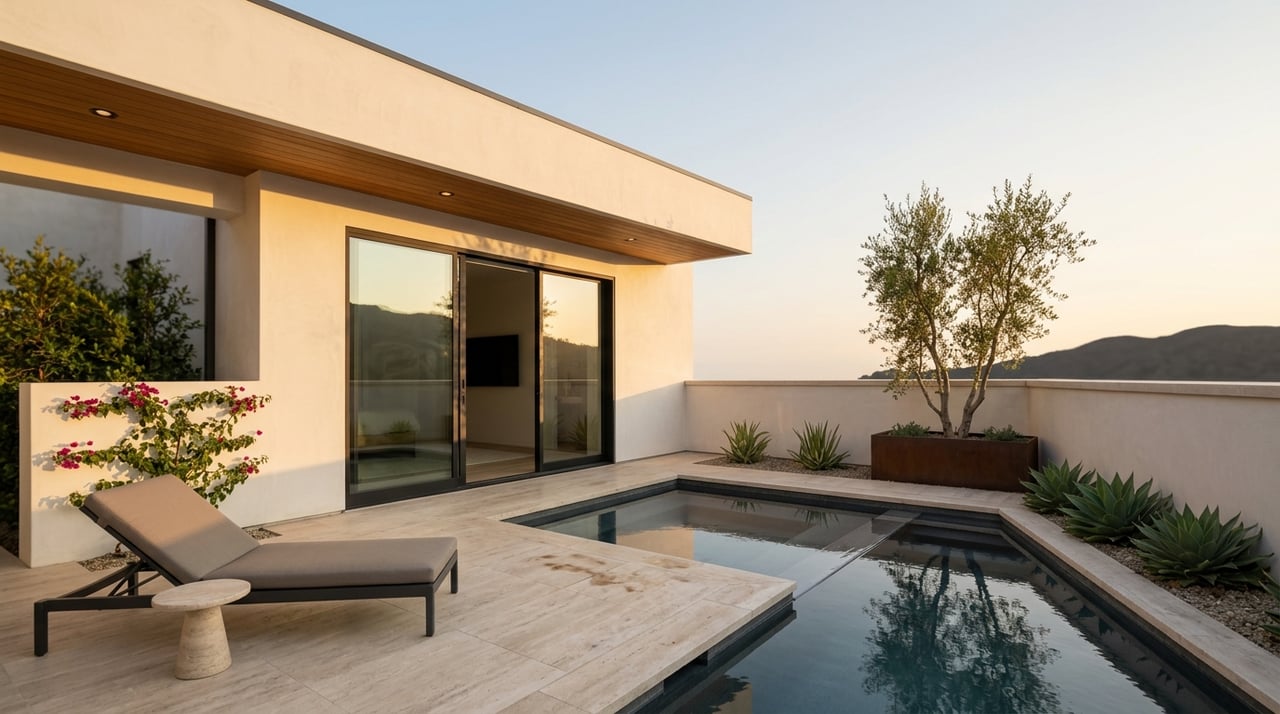
A great view can change how a home feels the moment you walk in. On the Sunset Strip, it can also change how a home is priced, marketed, and negotiated. If you are buying or selling in this part of West Hollywood, understanding how view premiums really work can help you make sharper decisions. Let’s dive in.
Why views matter on the Sunset Strip
The Sunset Strip is a distinct micro-market, not just a famous stretch of Sunset Boulevard. The City of West Hollywood describes it as a major entertainment destination, and the corridor also benefits from services provided by the Sunset Strip BID, including security and cleaning. That setting creates a different pricing environment than you might see in the broader city.
Current market snapshots show that the Sunset Strip neighborhood median sale price is about $988K, while nearby Hollywood Hills West is about $2.2M and ZIP code 90069 is about $2.07M. According to the City of West Hollywood’s Sunset Strip project archive, that spread suggests hillside and view-oriented inventory often trades in a meaningfully different tier from the broader local median.
In other words, the market is already telling you something important. A home with elevation, openness, and a true outlook is usually competing in a different conversation than a property that simply shares the same mailing area.
What a view premium really means
A view premium is the extra value buyers may assign to a home because of its outlook. That sounds simple, but in practice it is highly specific. The premium depends on what you see, how much of it you see, where you experience it from, and whether that sightline is likely to last.
Research cited by the Appraisal Institute found that a good view added about 8% to a residential property in one market. Broader literature reviews found view premiums ranging from 1% to 147%, depending on the market, sample, and methodology. That range is wide for a reason: the word view covers everything from a dramatic panorama to a limited street-facing glimpse.
For Sunset Strip homes, that distinction matters. A broad city-lights or canyon outlook is not interchangeable with a narrow slice over rooftops or a street-facing exposure. Buyers tend to pay more for openness, breadth, privacy, and usability, not just for the label.
Not all views are equal
This is where many pricing conversations go off track. Two homes may both claim to have a view, but the market may treat them very differently.
The same Appraisal Institute review explains that premiums are nonlinear. Some views add value, while others may add little or even work against a property. One study it cites found slightly positive results for harbor views, while mountain and street views were negative in that sample. The lesson is clear: a view must be evaluated for quality, not just presence.
On the Sunset Strip, view quality often comes down to a few practical questions:
- Is the outlook broad or limited?
- Is it from main living spaces or only one secondary room?
- Does the outdoor area share the same view?
- Does the view feel private or exposed?
- Is the sightline likely to remain intact?
A panoramic outlook from the living room and terrace will usually carry a stronger premium than a partial view from a bedroom window. Buyers notice that difference quickly, and appraisers do too.
How appraisers evaluate views
When a home is financed, the view conversation becomes more formal. Appraisers do not simply assign a blanket premium because a listing mentions city views.
Fannie Mae’s standardized appraisal guidance requires an overall view rating of Neutral, Beneficial, or Adverse. Appraisers also identify one or two specific view factors, such as Water View, Mountain View, City Street View, Residential View, Industrial View, Power Lines, or Limited Sight, as shown in the UAD field-specific standardization requirements.
That framework is useful because it reflects how nuanced value really is. A beneficial panoramic outlook is different from a limited street-facing view. An adverse location factor, such as adjacency to a busy street, may also affect value even if the home still captures some skyline exposure.
Why comparable sales matter so much
In a view-sensitive market like the Sunset Strip, the best pricing analysis starts with comparable sales that truly match the subject property. That sounds obvious, but it is often the hardest part.
Fannie Mae states that appraisers should prefer comparable sales from the same market area or neighborhood when possible and make market-supported adjustments. If direct comps are scarce, older sales or properties from a competing area may be used, but the appraiser must explain why and support the adjustments, according to the Fannie Mae Selling Guide on comparable sales adjustments.
That matters on the Sunset Strip because inventory is not uniform. Elevation changes, orientation, road exposure, privacy, and redevelopment risk can all shift value. A comp from the same ZIP code is not necessarily a good comp if its outlook, noise profile, or lot setting is materially different.
For buyers and sellers, the key takeaway is simple: view premiums are usually derived, not assumed. They come from paired sales, market evidence, and judgment about true similarity.
The role of permanence
One of the most overlooked parts of a view premium is how durable the view may be. A spectacular sightline can feel permanent, but in reality, permanence is often parcel-specific.
The Sunset Specific Plan guides growth along the corridor and includes target sites, development standards, and a public-hearing process for amendments. That means future changes nearby may affect some sightlines over time. A home’s value is not tied only to what you see today, but also to how likely that view is to remain unobstructed.
This is especially important if you are underwriting a premium purchase. A broad outlook with lower obstruction risk may justify stronger pricing than a similar home whose view corridor could change with nearby redevelopment.
Views versus noise and privacy
A strong view can raise value, but it does not erase every tradeoff. On the Sunset Strip, buyers are often balancing outlook against privacy, traffic exposure, and lot utility.
The area’s role as an entertainment corridor brings activity and visitor traffic. Research cited in the report found a measurable residential condo price discount of about 0.23% for each 1 dB(A) increase in road noise in one market. While that figure comes from a separate study and not specifically from Sunset Strip sales, it reinforces a practical point: noise can offset part of a view premium.
This is why a high-exposure property on or near a busy road may not command the same premium as a quieter home with a similarly broad outlook. If the view comes with reduced privacy or constant sound, buyers may discount the experience.
What buyers should look for
If you are buying on or near the Sunset Strip, it helps to look past the headline and test the actual quality of the view. Marketing language can be broad, but value is built on specifics.
Focus on these questions during your search:
- Which rooms actually capture the view?
- Do the primary living spaces open toward the outlook?
- Does the terrace, pool, or yard share the same visual impact?
- Is the view panoramic, canyon-facing, city-lights oriented, or limited?
- How much privacy do you have while enjoying it?
- Is road noise noticeable from the main entertaining areas?
- Could nearby parcels change the sightline in the future?
From an investment standpoint, the strongest view homes tend to combine usable living-space orientation, privacy, and lower obstruction risk. That combination is often more valuable than square footage alone.
What sellers should document
If you are selling, a view should be presented with precision. Buyers paying a premium will want to see clear evidence of what makes the outlook special.
That means your pricing and marketing strategy should show:
- Where the view is experienced inside the home
- Which outdoor spaces benefit from it
- Whether the outlook is broad, framed, or limited
- How privacy and noise compare with nearby alternatives
- Which comparable sales share similar view quality
The strongest case is not simply “this home has a view.” It is a supported story that explains why the view is better, more usable, or more durable than competing inventory. In a luxury segment, that level of detail often shapes both buyer confidence and negotiating leverage.
Why precise pricing wins
Overpricing a partial or compromised view can cost time and momentum. Underpricing a truly panoramic, private, and usable outlook can leave meaningful value on the table.
That is why Sunset Strip pricing benefits from a strategist’s lens. You need to evaluate the home itself, the comp set, the noise and privacy profile, and the parcel-level durability of the sightline. Especially in a market where direct comps may be limited, nuance matters.
If you are weighing a purchase, preparing a sale, or trying to understand how a view should factor into value, working with an advisor who can underwrite the details is a real advantage. For tailored guidance on Sunset Strip homes, connect with Bryce Pennel for a confidential consultation.
FAQs
How do view premiums affect Sunset Strip home prices?
- View premiums can increase value, but they are not fixed. On the Sunset Strip, broader, more private, and more durable views generally command stronger premiums than partial, street-facing, or noisy outlooks.
What type of view adds the most value on the Sunset Strip?
- Research suggests the biggest premiums come from view quality rather than the word itself. In this market, a broad city-lights or canyon outlook that is usable from main living spaces typically carries more value than a limited slice view.
How do appraisers judge views for Sunset Strip properties?
- Appraisers use overall ratings such as Neutral, Beneficial, or Adverse and identify specific view factors. They then compare the home with similar sales and make market-supported adjustments rather than applying a simple flat percentage.
Can road noise reduce a Sunset Strip view premium?
- Yes. A strong view can be partially offset by traffic sound, reduced privacy, or direct street exposure, especially when the home is close to an active corridor.
How can sellers prove a Sunset Strip home deserves a higher view premium?
- Sellers can strengthen their case by clearly documenting where the view is experienced, how usable it is from indoor and outdoor spaces, and which comparable sales share similar sightline quality, privacy, and noise conditions.
Can future development affect a Sunset Strip home’s view value?
- Yes. The durability of a sightline is parcel-specific, and future redevelopment may affect some views. That is why permanence is an important part of pricing and due diligence in this area.